Bekijk de video genaamd The Power of Emotional Intelligence van Travis Bradberry tijdens het TEDxUCIrvine-event.
Why do people with average IQs outperform those with the highest IQs 70% of the time? It all comes down to emotional intelligence. And unlike IQ, emotional intelligence is a choice and a discipline, not an innate quality bestowed upon the lucky. In this powerful and entertaining talk, Dr. Travis Bradberry, coauthor of Emotional Intelligence 2.0, shows you how to use this critical skill to your advantage. Dr. Travis Bradberry is the award-winning coauthor of Emotional Intelligence 2.0 and the cofounder of TalentSmartÒ¾the world’s leading provider of emotional intelligence tests and training serving more than 75% of Fortune 500 companies. His bestselling books have been translated into 25 languages and are available in more than 150 countries. Dr. Bradberry is a LinkedIn Influencer and a regular contributor to Forbes, Inc., Entrepreneur, The World Economic Forum, and The Huffington Post. He has written for, or been covered by, Newsweek, Time, BusinessWeek, Fortune, Fast Company, USA Today, The Wall Street Journal, The Washington Post, and The Harvard Business Review. This talk was given at a TEDx event using the TED conference format but independently organized by a local community. Learn more at https://www.ted.com/tedx
Veelvuldig ingezet bij campagnes is de social media advertising. Het is de overduidelijke paid media die mixt met de earned of owned mediakanalen. Een social media campagne kan eigenlijk niet zonder paid media en het adverteren op de diverse social media kanalen. Het voordeel van social media advertising is vooral het op profielen kunnen targeten.
Het voordeel van adverteren op social media is dat de advertenties getoond worden aan een specifieke doelgroep. Met targeting zorg je ervoor dat de doelgroep de juiste boodschap zien op de juiste momenten.
De advertenties kunnen exact afgestemd worden door targeting mogelijkheden.
Waarom adverteren? Een trianing:
Adverteren op Facebook of Instagram:
50 social media advertising tips:
1. Think long-term strategy, not short-term gain. Of course, you have long- and short-term social media marketing goals but – and here’s the catch – some marketers tend to focus on the short-term because their employers (or freelance clients) want to see immediate results. We get it, but still, we’re going to push back and say that a well-planned social media campaign has staggered results: some will present themselves quickly but others won’t become evident until months (and, sometimes, years if we’re talking the big picture) down the road.
2. Be picky. Think sustainable social channels, not EVERY social platform. The one thing we can say, for sure, about social media is that it’s ever-changingas soon as you’ve learned everything, there’s something new to learn. With that in mind, as you develop your social strategy, focus on the platforms you can run like a BOSS. It’s better to dominate a few, than to be mediocre at them all.
3. Even if you build it, they might not come. Even the greatest social media campaign won’t draw followers, if there are no followers to draw. Hard truth, marketing friends: You have to build your social following and, very preferably, build it where many millions of your target audience gather online. Consider, for example, that almost 1.5 billion people log into Facebook every day; you have a good chance to build a solid base there, if you take your time and put in the effort to grow a large, loyal, and engaged audience.
4. Research each platform. This advice never gets old: Know your platform. Know how ad types differ by platform. And, understand how each platform’s ad formats further your goals. For example, if you’re trying to squeeze leads into the next band of your sales funnel, a remarketing engagement campaign might do the trick. On the other hand, if you’re simply looking to extend brand awareness, then an impressions-based campaign might be more up your alley. So, where (which platform) is your audience more likely to engage? Or, where do they congregate in high numbers, so you have a better impressions pool? Know your platform.
5. Diversify across social platforms. (But not too many.) David Christopher, Director of Marketing and Growth at Tailwind, said it best: “If I was going to point to a trend for 2018 it would be diversification of ad spend across networks. There’s so much money in Facebook advertising today that smart marketers are having to get extremely efficient to get results when targeting new prospects on the network. Any time a lot of money enters an auction you’re wise to enter other auctions where there’s less money sloshing around. I think in 2018 we’ll continue to see smart social marketers diversify and learn how to effectively spend ad dollars on other social networks like Twitter, Pinterest, LinkedIn, and even Reddit.”
6. Embrace your reviews and testimonials – the good AND the bad. Everyone reads reviews but, here’s the thing: If you have only positive reviews, everyone (or almost everyone) will doubt your reviews. There is no product, good, or service in the world than can thrill 100% of consumers, period. So, be honest with your reviews, recognize the good and, perhaps most importantly, respond to the bad. Acknowledge a negative experience, show a willingness to improve, and outline the steps you’ll take to move forward. This will engender trust in all of tomorrow’s customers who are reading your reviews today.
7. Have a comment conversation. We just mentioned this, but the two-way brand-consumer conversation extends beyond reviews: Respond to comments on your blog posts, Facebook posts, and Instagram photos. @ people back on Twitter. Encourage conversation and embrace pleasantries; they show the human side of your brand. And, if and when a negative experience comes up, always take the high road; respond, empathize, and strive to be better next time.
8. Your employees are a part of your social media presence. Notice how we didn’t even make this a suggestion? It’s a fact, plain and simple. In the words of Katy LaLanne, Content Marketer at Sendible, “Every employee is their own brand but also an extension of your organization. As social culture in the workplace expands, I think we’ll see an increase in company-wide involvement and storytelling across social media in 2018. 64% of millennials believe that social media is one of the most effective channels for connecting with brands (Source: Microsoft) but messages are re-shared 24 times more frequently when they’re sent by employees instead of the brand itself.
Trust between customers and brands is deepened when there is a face and a story behind a brand, which is often where influencer marketing comes into play. Don’t disregard influencer marketing opportunities, but look for leaders throughout your organization, from top to bottom, who can deepen trust with your audiences by educating and entertaining.
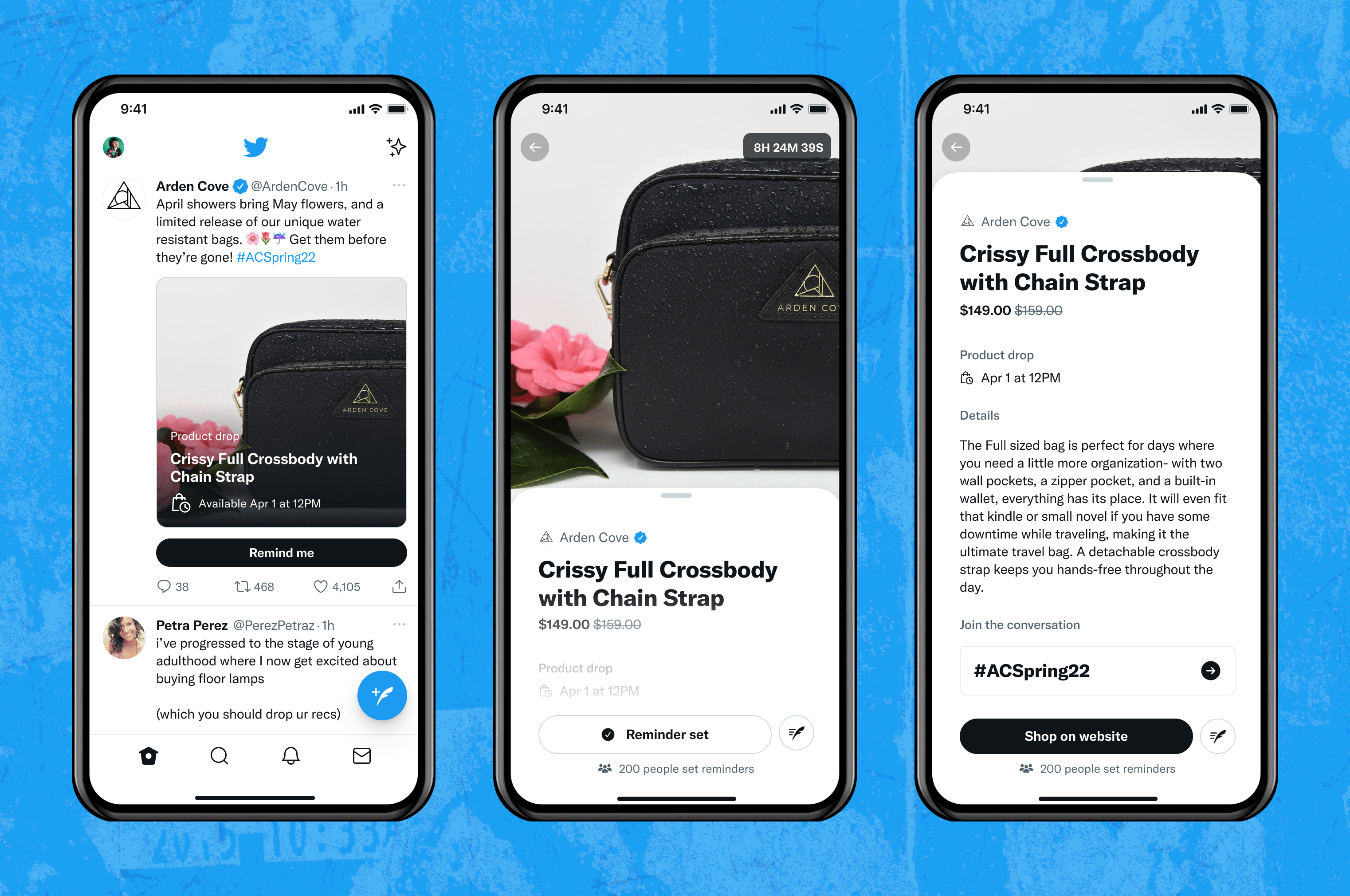
Social platform Twitter is reeds sinds 2021 bezig met shop-achtige opties op de account. Als een verkoper tweet over een aankomende lancering, kunnen gebruikers van het platform klikken op een ‘herinner mij’-knop. Bij de Tweet zijn ook alle productgegevens te vinden, zoals de prijs, een beschrijving en foto’s.
Op de dag zelf krijgt dan de gebruiker een melding net voor voor het tijdstip van de lancering. Wanneer er op de melding wordt geklikt, kan het product ook meteen worden aangeschaft op de website van de retailer.
People come to Twitter to talk about products and product drops every day. And merchants have long been dropping products on Twitter without any native product support. We’re excited to change that and introduce new shopping features that empower shoppers to stay on top of the launches that matter most to them and provide merchants with another way to engage shoppers around big product moments.
Elke week wordt er wel iemand digitaal aan de schandpaal genageld. In de 3Doc:Sociaal tribunaal onderzoekt journalist Doortje Smithuijsen hoe sociale media steeds meer veranderen in een openbare rechtszaal waarin iedereen elkaar kan aanklagen en veroordelen. Onder andere Sander Schimmelpenninck, Johan Fretz, Marisella de Cuba en Wierd Duk komen aan het woord.
Wij worden massaal online gemanipuleerd. Hoe bepalen Facebook, Instagram en YouTube wat jij en ik te zien krijgen? Hoe werkt die fabeltjesfuik nou eigenlijk? En als de platforms zo slecht met ons omgaan, waarom doet niemand er wat aan?
Google en Facebook beslissen wat ongepast, illegaal, obsceen, vals, misleidend of aanstootgevend is…
Op deze en andere vragen wilden we bij Bits of Freedom antwoord. Dr. Holly Robbins ging voor ons op onderzoek uit. Dr. Robbins is een design-onderzoeker en keek naar de drie populairste platforms in Nederland: Facebook, Instagram en YouTube. Haar onderzoek richt zich op hoe onze communicatie, en daarmee het publieke debat, gemanipuleerd wordt. Zo kunnen wij – volgens het genoemde onderzoek – diverse vormen van manipulatie onderscheiden: